
Palazzo Talon Sampieri, Bologna
Hercules and Antaeus
A Guercino fresco from the height of his powers
The painter
From Cento to Bologna
Guercino was born in Cento in 1591. His gift for painting was obvious from early childhood; he developed it across the whole of the seventeenth century and came to be recognised as one of the masters of the Baroque at its height.
The odd nickname he carried through life — il Guercino, the squinter — probably came from a form of strabismus, which some believe shaped the way he set figures in space.
His first work, the story goes, was made in Cento itself, on the façade of the house where he was living: a free-hand copy, drawn from memory, of a print he had at home. His family decided to encourage the precocious talent, sending him first to Bertozzi’s workshop and then to Bartolomeo Gennari.
From 1609 the young apprentice moved to Bologna, where he could work in other studios and, above all, study the paintings already decorating the city’s churches and palaces. One of his works survives inside Palazzo Talon Sampieri, and can be visited today thanks to the Amici del Guercino association and the owners’ willingness to open their home.
What you will see
The struggle of Hercules and Antaeus
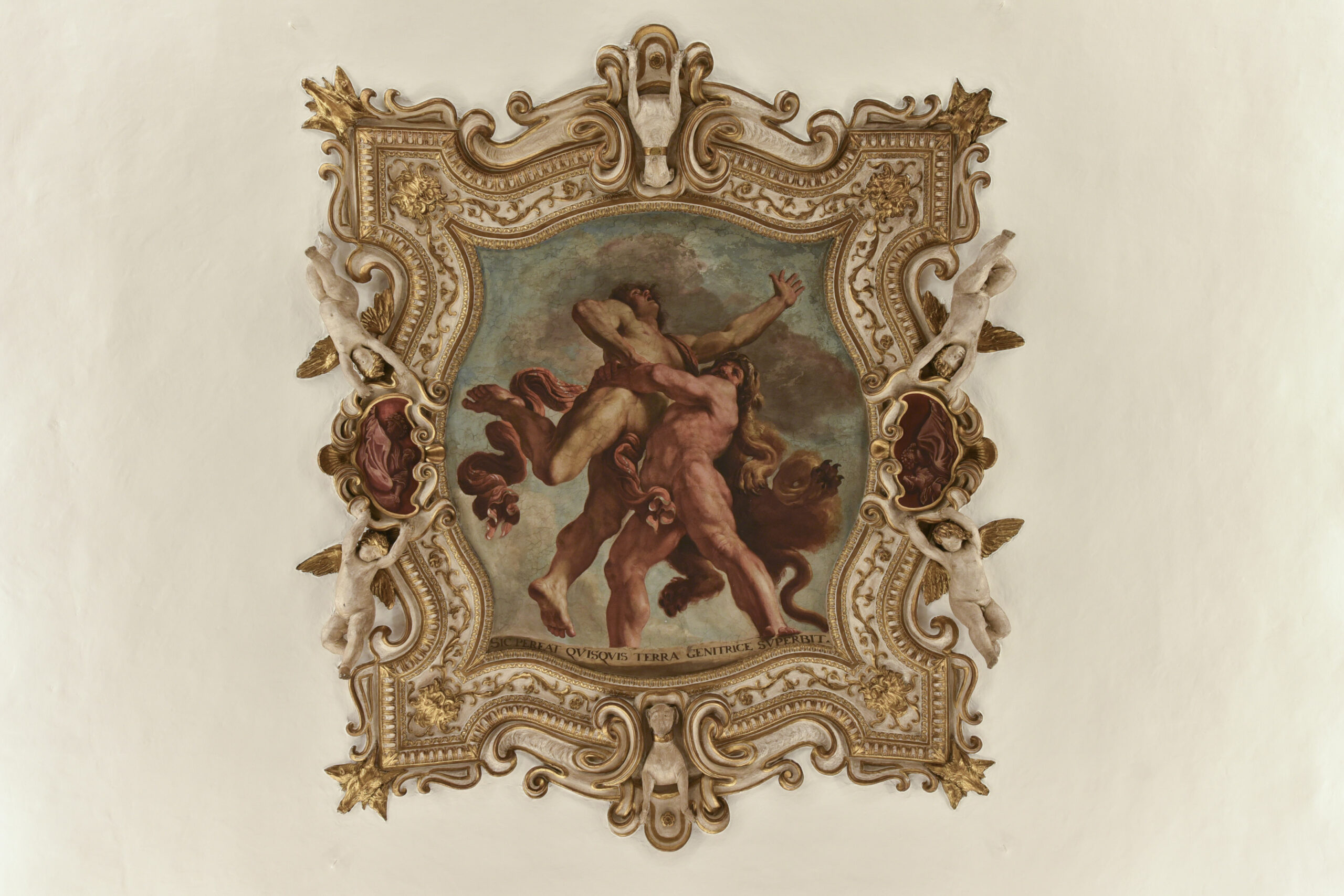
The fresco shows Hercules and Antaeus locked in a violent struggle, painted at the height of the artist’s maturity. By then his reputation was such that the family is said to have left him free to choose both the subject and the composition — which may be part of why it is among his most successful frescoes.
The giant Antaeus was the son of Poseidon and of Mother Earth, and he was invincible for as long as he stayed in contact with his primal element. Hercules worked out where that strength came from and, to defeat him, lifted him clear of the ground.
The giant’s strength drained away at once, and he was crushed in the hero’s grip. That is precisely the moment on the palazzo ceiling: Antaeus, knowing he is beaten, attempting one last desperate response.
The frame
Silvered and gilded stucco
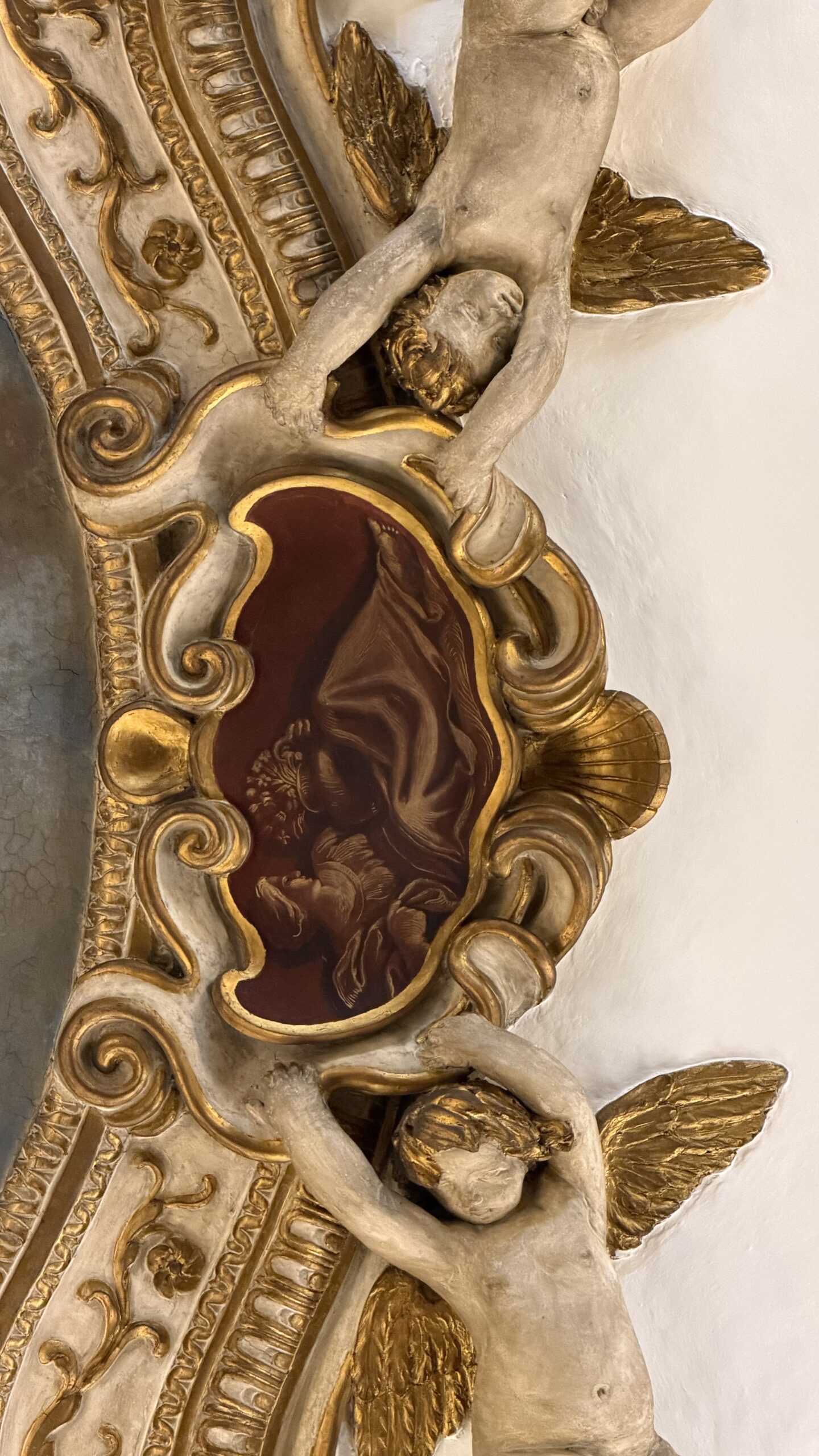
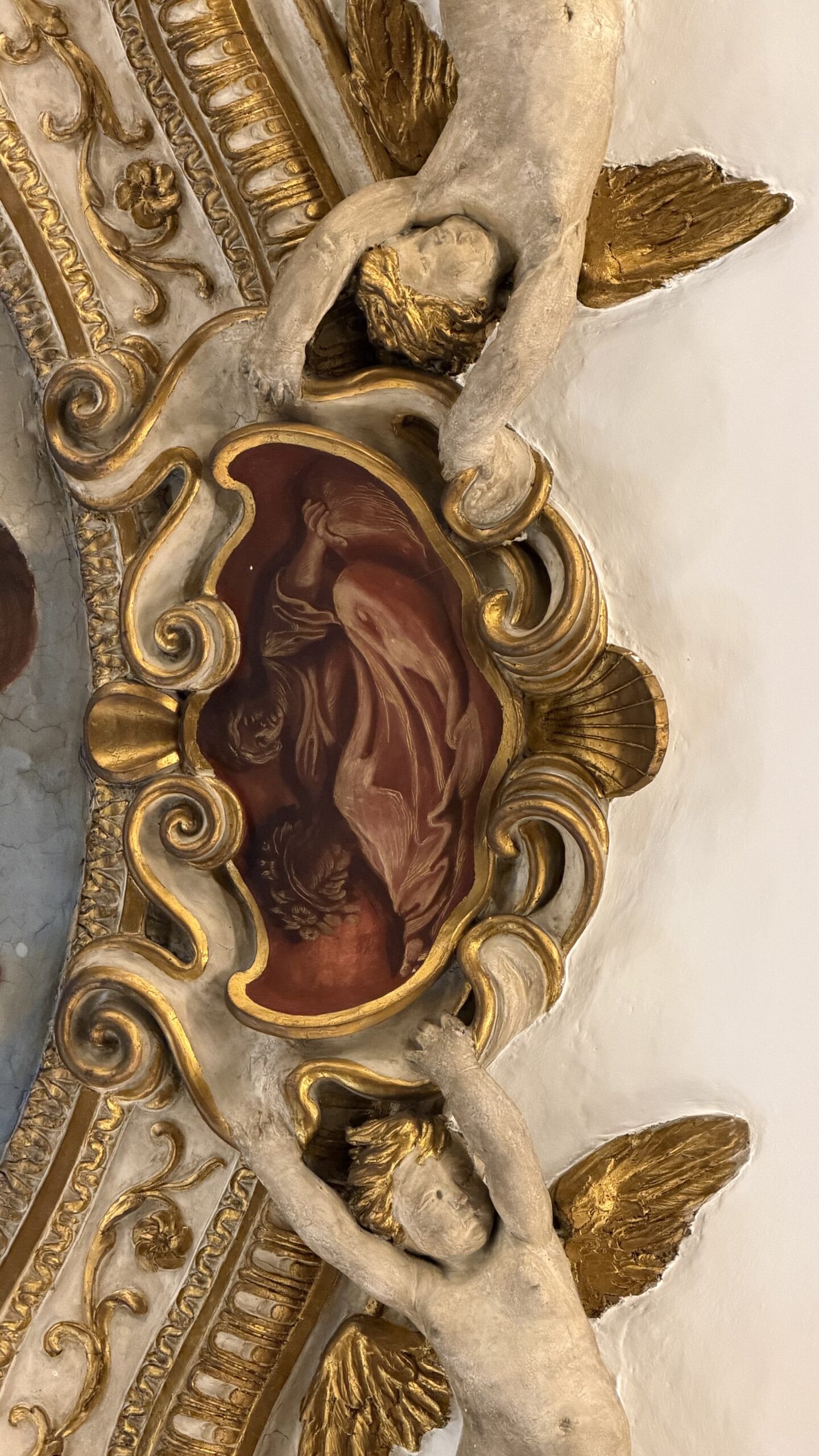
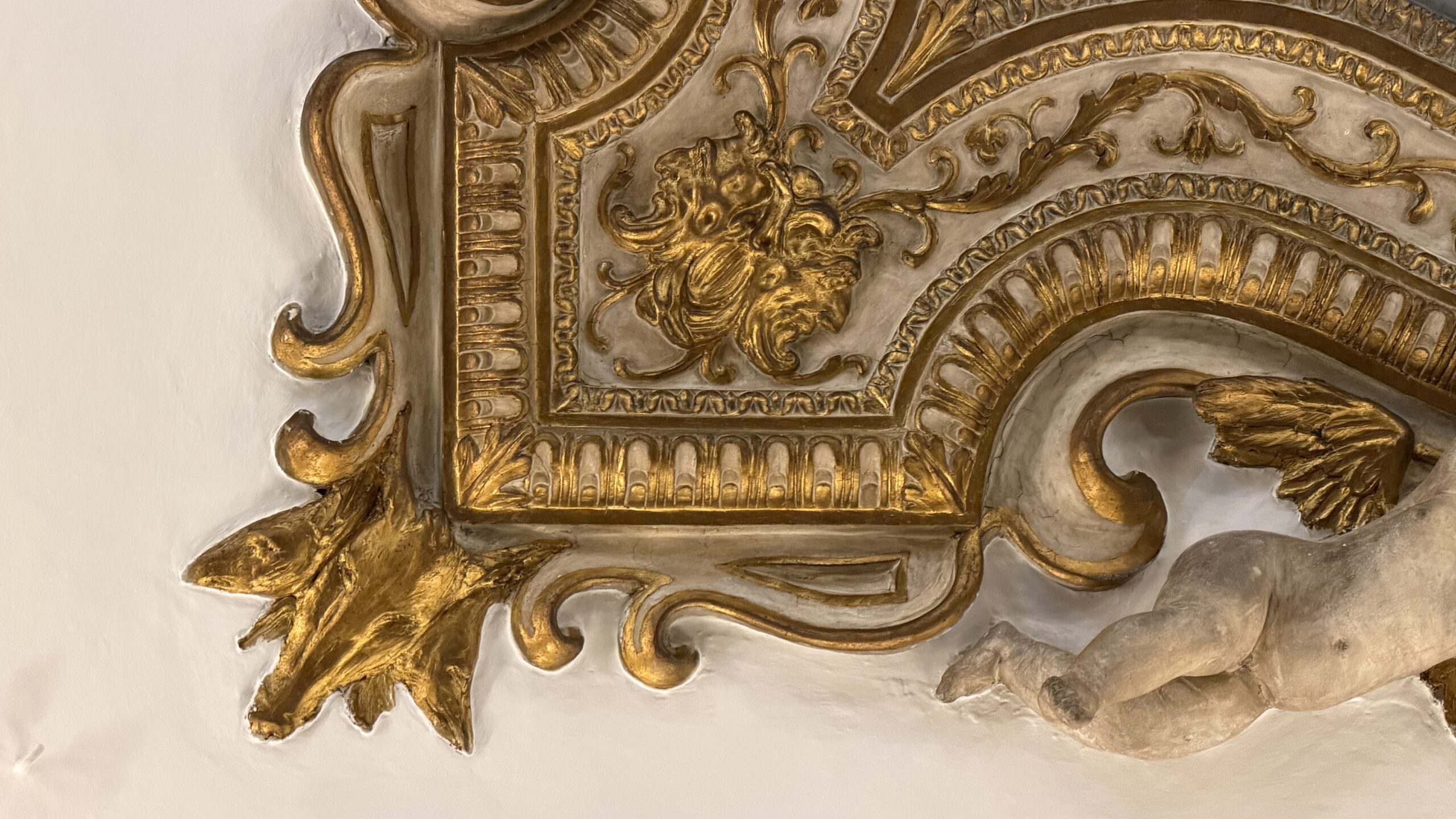
The scene sits inside a frame of silvered and gilded stucco, populated with figures and winged putti that lean out towards the viewer. It is part of the work rather than a border around it: it draws the eye to the centre and deepens the painted scene.
Seeing it in person
The fresco is in a private house and cannot be visited freely. Each visit is arranged individually.